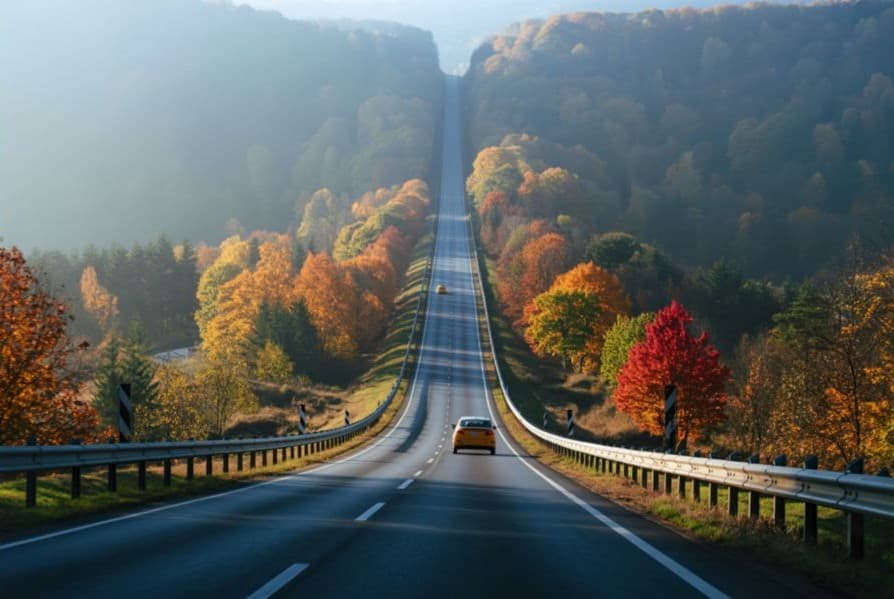
Fall Road Trip 2026: How to Prepare for the Most Beautiful and Unpredictable Season
This article contains affiliate links. If you purchase through them we may earn a small commission at no extra cost to you.
Editorial Staff | AutoPartsInformer
Experienced drivers and automotive ecommerce professionals sharing real road knowledge
Fall is arguably the best season for a road trip. The summer crowds have thinned, the temperatures are comfortable and the scenery — particularly in New England, the Appalachians, the Rockies and the Pacific Northwest — is breathtaking.
But fall is also the season that transitions into winter, and that transition happens faster than most drivers expect. One week you are driving in 65-degree sunshine and the next you are dealing with frost, fog and wet leaves that are more slippery than most people realize. Fall preparation is about enjoying the beauty while respecting what is coming.
Fall Vehicle Inspection: Preparing for What's Coming
Battery Check — Last Chance Before Cold
Fall is the last opportunity to replace a weak battery before cold weather makes things worse. Cold weather reduces battery capacity by up to 50% — a battery that starts the car at 60°F but is borderline may completely fail at 20°F. If your battery is 3 or more years old, have it load tested in September or October, not December when you need it most. The cost of a new battery is trivial compared to being stranded in freezing weather.
Heating System Check
Fall is exactly when you find out if your heater works — ideally before you desperately need it at 5am on a dark, cold October morning. Run the heater on full blast for 10 minutes and verify it actually produces heat, not just air. Check that the defroster clears the windshield quickly — both front and rear. A slow-to-clear windshield on a cold morning is a visibility hazard.
Coolant and Antifreeze
Check both the coolant level and the antifreeze protection level. A 50/50 mix of coolant and distilled water protects to around -34°F for most formulations. If you live in an extreme cold region or your coolant has not been changed in 2+ years, test it with an inexpensive antifreeze tester before the temperatures drop.
Wiper Blades
Fall rain and early morning frost demand wiper blades that actually work. If your current blades streak or chatter, replace them before your trip. In regions where early snow is possible, consider switching to winter wiper blades — they use a boot design that prevents ice from loading into the wiper frame mechanism, which causes standard blades to stop clearing properly.
Lights — Days Are Getting Shorter
In fall, you will be driving in the dark far more than in summer. Check all exterior lights — headlights, taillights, brake lights and turn signals. If your headlights have yellowed plastic lenses, a headlight restoration kit can dramatically improve light output. Consider LED headlight bulbs if your headlights are dim — the difference in visibility is significant.
Car Battery Tester
Diagnostics
Test your battery in September before cold weather arrives. A battery that seems fine at 65°F may fail completely at 20°F.
Check Price on AmazonWinter Wiper Blades
Visibility
Sealed boot design prevents ice accumulation in the wiper arm. Essential if you might encounter frost, sleet or early snow on your fall trip.
Check Price on AmazonAntifreeze / Coolant
Engine
Check antifreeze protection level before fall trips. Top off or flush if the coolant is old, discolored or has not been changed in 2 years.
Check Price on AmazonHeadlight Restoration Kit
Visibility
Yellowed headlight lenses cut light output dramatically. A restoration kit polishes them clear and significantly improves nighttime visibility.
Check Price on AmazonFall Visibility: Sun Glare, Fog and Early Darkness
Low-Angle Sun Glare
The sun sits lower in the sky in fall. Morning and evening glare is extreme and can completely blind drivers, particularly at the hours that coincide with rush hour and school bus routes. Keep polarized sunglasses accessible at all times in fall — not in your bag, not in the back seat, but within reach. A dirty windshield scatters low-angle light and makes glare dramatically worse. Keep the inside and outside of your windshield clean.
Fall Fog
Temperature differentials in fall — warm days and cold nights — create ideal conditions for dense ground fog. Fog driving rules: slow down significantly, use low beams (not high beams — they reflect off the fog and blind you), increase following distance dramatically, and if visibility drops below 100 feet on a highway, pull off safely and wait. Fog can go from light to zero visibility in seconds in certain valley and low-lying road conditions.
Foggy Windows
Fall temperature differentials cause the inside of your windows to fog up instantly when cold air from outside meets the warmer, humid air inside the cabin. Use the defroster plus AC together — the AC dehumidifies the air and the defroster heats the glass. Do not drive with a partially fogged windshield. Pull over and clear it completely.
Polarized Driving Sunglasses
Visibility
Polarized lenses cut reflected glare from wet roads and low-angle sun far better than standard tinted lenses. Keep them in the car door pocket.
Check Price on AmazonAnti-Fog Windshield Spray
Visibility
Applied to the interior glass, anti-fog spray prevents the rapid fogging that happens on cold fall mornings. Reduces time waiting for the defroster.
Check Price on AmazonLED Headlight Bulb Upgrade
Visibility
LED headlight bulbs produce significantly more light than standard halogen bulbs. A worthwhile upgrade before the longer fall nights begin.
Check Price on AmazonTraction in Fall: Wet Leaves, Rain and Early Frost
Wet Leaves
Wet leaves on pavement have a friction coefficient similar to ice. This surprises more drivers than actual ice does, because people do not mentally prepare for it the same way. A leaf-covered road through a forested area, especially on a curve, can cause a car to slide well beyond what the driver expected. Slow down significantly on leaf-covered roads, especially in shaded areas where leaves stay wet longer.
First Rain After a Dry Spell
As noted in the spring guide, the first rain after a dry period makes roads extremely slippery. In fall, this is compounded by the presence of decomposing organic material on the road surface. The first hour of fall rain on roads that have been dry for a week is statistically one of the most hazardous driving conditions of the year.
Early Morning Frost and Black Ice
Black ice can form when ambient temperatures are above freezing if a bridge deck, shaded road section or moisture-covered surface has cooled below 32°F overnight. Bridge decks freeze first because they are exposed to air from both above and below. If you are driving rural roads in early morning in October or November and the temperature is below 38°F, treat all bridge decks and shaded sections with extra caution.
When to Switch to Winter Tires
The rule of thumb: when overnight temperatures consistently drop below 45°F. Winter tire rubber compounds remain soft and grippy at these temperatures where all-season compounds begin to stiffen. If you live in a region that sees consistent snow and ice, make the switch in October rather than waiting for the first snowfall, when tire shops are overwhelmed with demand.
All-Season Tires
Tires
For regions that get occasional winter weather, quality all-season tires are a solid compromise between summer performance and winter capability.
Check Price on AmazonRain Repellent for Windshield
Visibility
Dramatically improves wet visibility by causing water to bead off the glass. Especially useful on leaf-debris-covered fall roads in rain.
Check Price on AmazonFall Emergency Kit: Bridging Summer and Winter
A fall emergency kit starts with your standard roadside gear and adds the early winter items you hope not to need. The key difference from summer: temperatures drop fast after dark in fall — being stranded in the daylight at 60°F can turn into a cold problem by 10pm at 38°F.
Ice Scraper
Have one in the car from October forward. Stores sell out when the first frost hits. A quality scraper with a long handle and snow brush is worth the $15 — cheap plastic scrapers break at the worst moment.
Warm Clothing Layer
Keep a jacket, gloves and warm hat in the trunk during fall. You may not need them while driving — but if you are stranded at 2am in October, they matter. This is a low-cost, zero-effort precaution.
Emergency Blanket
A compact mylar emergency blanket folds to the size of a deck of cards and retains up to 90% of body heat. Have one per person for cold-weather travel. A wool or fleece blanket is more comfortable for non-emergency overnight situations.
Emergency Blanket
Emergency
Mylar emergency blankets pack small and retain 90% of body heat. Essential for fall and winter stranding situations.
Check Price on AmazonIce Scraper and Snow Brush
Winter Prep
Buy before the first frost — shelves empty fast. A long-handle model clears the roof without stretching dangerously.
Check Price on AmazonPortable Jump Starter
Emergency
Battery failures spike in fall as temperatures drop. A compact jump starter handles this without requiring another car.
Check Price on AmazonPlanning a Fall Road Trip: Timing the Foliage and the Weather
Peak Foliage Timing by Region
The Rockies and high-elevation areas peak first — typically mid to late September. New England peaks mid-October in northern Vermont and New Hampshire, a week or two later in southern New England. The Southern Appalachians and Blue Ridge peak late October into early November. The Pacific Northwest's fall color is more muted but beautiful in October. These windows are roughly 2–3 weeks wide and shift by a week depending on the summer.
Deer Season Awareness
October and November are deer rut season. Deer are moving more, moving erratically and crossing roads at all hours — but especially at dawn and dusk. Deer-vehicle accidents spike dramatically in these two months. In rural areas, scan the roadsides constantly. If you see one deer, slow down immediately — deer travel in groups and a second animal often follows the first across the road seconds later.
Popular Fall Destinations and Congestion
Vermont and New Hampshire during peak foliage are among the most congested road conditions in the Northeast. Route 100 in Vermont, the Kancamagus Highway in New Hampshire, and the Blue Ridge Parkway can have multi-hour backups on peak weekends. Go early — ideally arrive at your scenic drive starting point before 8am. Weekdays are dramatically less congested than weekends.
Flexible Accommodations
Weather variability in fall is high. Book refundable accommodations when possible so a unexpected storm does not cost you a non-refundable night at a destination you cannot reach safely. Having one extra day of flexibility in your itinerary pays for itself in reduced stress if conditions change.