Spring Road Trip 2026: How to Prepare Your Car After a Long Winter
This article contains affiliate links. If you purchase through them we may earn a small commission at no extra cost to you.
Editorial Staff | AutoPartsInformer
Experienced drivers and automotive ecommerce professionals sharing real road knowledge
Spring is when the road trip itch really hits. The weather breaks, the days get longer and suddenly every highway looks like an invitation. But spring driving comes with its own set of challenges that catch a lot of drivers off guard.
Your car has just survived winter — and winter is hard on vehicles. Salt, cold, potholes, and months of short trips that never fully charge your battery all add up. Before you point the hood toward the horizon, here is what to check.
Post-Winter Vehicle Inspection: What Winter Did to Your Car
Salt and Corrosion
Road salt is the enemy of everything metal underneath your vehicle. Check the undercarriage, wheel wells and brake lines for rust and corrosion. Spring is exactly when salt damage shows up — the freeze-thaw cycles accelerate it. A pressure wash of the undercarriage and an application of rust-inhibiting spray is worthwhile if you live in a salted-road region. Brake lines with visible corrosion should be inspected by a mechanic before you trust them on a long trip.
Battery Check
Cold weather kills batteries slowly. All winter, every cold start has been drawing more from your battery than it would in warm weather. If your battery is 3 or more years old, have it load tested before a spring road trip. Most auto parts stores do this free. A battery that passed the test in October may be borderline by April after a harsh winter.
Tire and Alignment Inspection
Winter potholes are brutal on tires and alignment. Inspect each tire for cuts, bulges or sidewall damage from pothole impacts. Uneven wear across the tire face often indicates an alignment problem — if one side of the tread is significantly more worn, get an alignment check. A misaligned car wears tires quickly and handles poorly on long trips.
Brake Inspection
Winter moisture gets into brake components. Listen for grinding or squealing when braking, and pay attention to whether the car pulls to one side — a caliper that has seized or a rotor with uneven corrosion will cause this. If the brake pedal feels soft or spongy, have the fluid inspected — brake fluid absorbs moisture over time and its boiling point degrades.
Wiper Blades
Winter destroys wiper blades. The rubber compounds deteriorate in freezing temperatures, the blades get iced up repeatedly and the frames can bend under accumulated snow weight. If your wipers were on the car all winter, test them now. You will be needing them — spring rain is relentless. If they streak or chatter across the glass, replace them before you go.
Paint and Exterior Protection
Road salt and winter chemicals strip wax and degrade paint. Spring is the right time for a thorough wash, clay bar treatment and fresh wax or sealant. Beyond aesthetics, wax protects the paint from the oxidation and UV degradation that happens all summer. If the paint feels rough to the touch rather than smooth, a clay bar treatment removes bonded surface contaminants.
Car Battery Tester
Diagnostics
Essential for spring battery checks after a hard winter. Know if your battery is borderline before you discover the problem 300 miles from home.
Check Price on AmazonAll-Season Wiper Blades
Visibility
New wiper blades for spring should handle both heavy spring rain and any late-season snow. Replace both front blades at the same time.
Check Price on AmazonUndercarriage Rust Protection Spray
Protection
Applied after a thorough undercarriage wash, rust inhibitor slows corrosion on brake lines, frame rails and suspension components damaged by winter salt.
Check Price on AmazonSpring Tires: Making the Switch and What to Look For
When to Switch from Winter to All-Season Tires
The threshold is roughly 45°F (7°C) consistently overnight. Winter tire rubber compounds are designed to stay soft in cold temperatures — when it warms up, that soft compound wears faster on dry, warm pavement. Once your regional low temperatures are consistently above 45°F, make the switch. In most northern states, this is somewhere between late March and mid-April.
Tire Pressure After Temperature Changes
For every 10-degree drop in ambient temperature, tires lose approximately 1 PSI of pressure. This means winter tires that were properly inflated in October may be significantly underinflated by February — and your all-season tires going back on in April have been sitting at lower pressure in cold storage. Always check and adjust pressure when mounting seasonal tires.
Tire Rotation After Winter
Spring tire mounting is a good time to also rotate your all-season tires from their previous position, extending their even wear. Most shops will do the rotation while mounting tires. If you drive a front-wheel-drive vehicle, your front tires do the most work and wear significantly faster — rotation is especially important.
Digital Tire Pressure Gauge
Tire Tools
Check pressure cold every time you mount a fresh set of tires. Accurate to 0.5 PSI, which matters for proper handling and fuel economy.
Check Price on AmazonPortable Tire Inflator
Tire Tools
Brings tires up to correct pressure at home without driving to a gas station. Also invaluable on the road when slow leaks develop.
Check Price on AmazonFluid Check: What Spring Driving Demands
Washer Fluid
Spring bugs hit the windshield hard, and spring rain brings grime off winter roads onto the glass. Your washer fluid reservoir will work overtime. Fill it completely before departure and consider packing an extra bottle. If you have been running a winter de-icer formulation, switch to a spring/summer concentrate that handles bugs and general road grime better.
Coolant
Spring is when overheating season begins. Longer drives, warmer ambient temperatures, and potentially a coolant system that has been sitting under less stress all winter — check the level in the overflow reservoir when the engine is cold and examine the coolant condition. It should be bright and clear, not rusty or milky. Milky coolant indicates a head gasket issue. Rusty coolant means the system needs a flush.
Oil
If you delayed an oil change during winter, spring is the time to do it. Check both level and condition — pull the dipstick and look at the oil on a white rag. Light brown is good, dark brown is marginal, black and gritty means an overdue change. With a road trip coming, start with fresh oil regardless of mileage if it has been more than 4–5 months.
Windshield Washer Fluid Concentrate
Fluids
Concentrated formulas mix with water to fill a full reservoir for less than a ready-mixed jug. Spring-formula clears bugs and road film better than winter blends.
Check Price on AmazonCoolant / Antifreeze
Fluids
Top off or do a full coolant flush before hot-weather driving. The correct antifreeze ratio protects against both freezing and overheating.
Check Price on AmazonSpring Weather Challenges: Rain, Wind and Wildlife
Spring Rain Driving
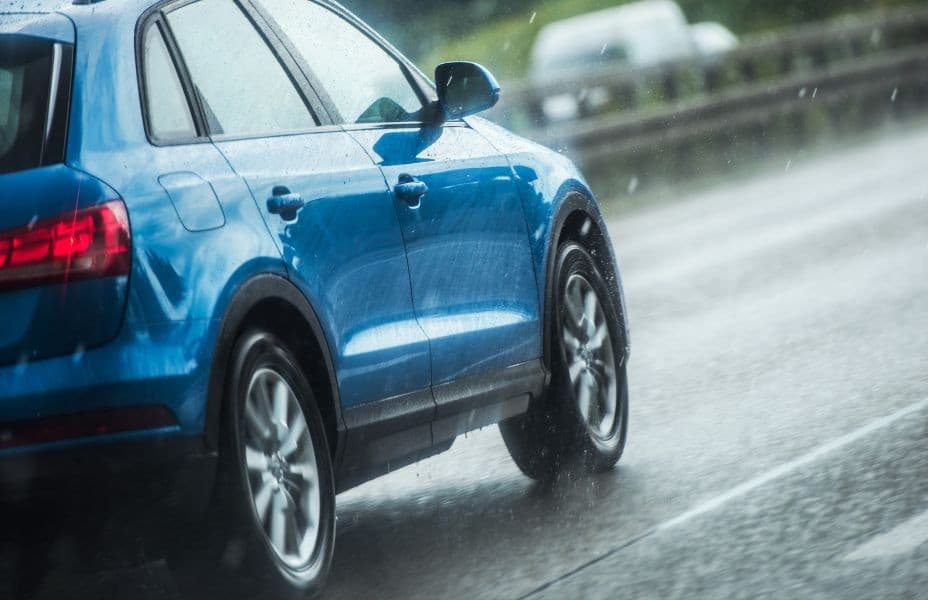
The most dangerous rain condition is the first rain after a dry spell. Oil, rubber and road grime accumulate on dry pavement and become a slick film when first wet. Extend your following distance to at least four seconds in rain. Hydroplaning happens at highway speeds on tires with worn tread — if you feel the steering go light, ease off the accelerator gently and hold the wheel straight until traction returns. Do not brake suddenly.
Wind Advisory Awareness
High-profile vehicles — SUVs, minivans, pickup trucks — are significantly affected by crosswinds on exposed highways like the Great Plains and elevated passes. Check wind advisories for your route, especially in open terrain. Slow down in sustained crosswinds and be prepared for gusts when emerging from sheltered cuts or overpasses.
Wildlife on Roads
Spring migration means more animals crossing roads. Deer are present year-round but particularly active in spring. Scan the roadside shoulders constantly, especially at dawn and dusk when animals are most active. If an animal appears ahead, brake firmly but do not swerve violently — swerving causes more severe crashes than the animal strike in many cases.
Tornado Awareness (Midwest Spring)
If your route crosses the central United States between March and June, tornado season is a real consideration. Download a severe weather alert app before your trip. If a tornado warning is issued for your location, get to a substantial building immediately — never shelter under an overpass. An overpass concentrates wind, does not protect from debris, and puts you in a dangerous position while other drivers attempt to use it.
Construction Season
Spring is the start of road construction season across most of the country. Build extra time into your route planning, especially on Interstate routes where long construction zones are common. Fines in construction zones are doubled in most states. Slow down, follow flaggers and maintain greater following distance — construction zone rear-end collisions are unfortunately common.
Spring Road Trip Comfort: Packing for Variable Weather
Spring weather changes dramatically within a single day. Temperatures that are 70°F and sunny at noon can drop to 45°F with rain by evening. Pack in layers rather than for a single temperature. A lightweight rain jacket takes minimal space and handles both a cool morning and an afternoon downpour. Allergy medications are worth packing even if you are not a regular sufferer — pollen levels in unfamiliar regions can catch you off guard.
All-Weather Floor Mats
Interior Protection
Spring mud season tracks into the car constantly. Rubber all-weather mats lift out for easy cleaning and protect carpet from permanent staining.
Check Price on AmazonRain Repellent Windshield Spray
Visibility
Applied to glass, rain repellent causes water to bead and clear at highway speed — dramatically improving visibility in heavy spring rain.
Check Price on Amazon